Food Processing Roofing Planning
Food Processing Roofing for Lubbock's Ag Economy
Lubbock sits at the center of one of the largest agricultural regions in the country, and that drives a steady base of food and beverage processing around the city. Cotton and grain handling along the rail district in East Lubbock, the cold-storage and distribution buildings off the Brownfield Highway, beverage and food-service plants serving the South Plains, and the produce and protein handlers that supply the region all run buildings where the roof has to do more than keep rain out. It has to manage moisture, carry heavy mechanical loads, and meet food-safety rules that decide which materials are even allowed over the line.
A roof failure over an active processing floor is not a leak; it is a food-safety incident. Water entry over a production line triggers a call to the plant's quality-assurance team, a possible product hold, and regulatory documentation. We plan processing-plant roofs to eliminate that exposure rather than respond to it, and that starts with understanding the two forces that wreck these roofs from the inside: washdown humidity and refrigeration.
Washdown Humidity Works the Roof From Below
Sanitation in a food plant means high-volume, often heated, washdown of floors, walls, and equipment, frequently every single day. That water becomes humidity, and the humidity rises into the deck cavity where it condenses on the cold underside of the metal and on the fasteners. Without a properly placed vapor retarder, that condensation corrodes the deck, saturates the insulation, and degrades the assembly with no leak ever showing on the surface. We design the assembly to control the vapor drive, with the retarder on the warm side and insulation chosen so we are not building a hidden condensation trap above a wet-process room.
Refrigeration Loads and Cold-Chain Continuity
Freezer rooms, chill rooms, and blast-freeze areas change the roofing problem entirely. The roof over refrigerated space has to hold thermal continuity so the cold chain inside stays stable and so the vapor drive does not reverse and condense inside the assembly.
Get the cold-side assembly wrong and you get condensation inside the roof that corrodes the deck and ruins the insulation with no external symptom until the structure has already lost capacity. We core and confirm the existing condition before recommending a recover over any refrigerated area.
Materials Have to Clear the Food-Safety Plan
Not every commercial roofing product is acceptable over a food-production environment. USDA and FDA-regulated plants require the membrane, and just as importantly the adhesives, primers, and sealants in the flashing details, to be confirmed acceptable before installation. Many standard roofing adhesives carry solvents that are not allowed in a food-production setting. White TPO and PVC single-ply are generally acceptable over enclosed processing areas, but the specific product and installation method have to be checked against the building's food-safety plan. We identify the regulatory framework and confirm material acceptability with the plant's QA team before specifying anything that goes over a food-contact zone.
Working Around a Running Plant
Processing plants here often run two or three shifts with one weekly sanitation window as the only time the floor is down. Any work that opens the envelope over an active production area is confined to those windows, and the QA manager confirms the floor is clean and protected before we cut. We phase the project around the production calendar, sequence each section so it is dried in watertight before the line restarts, and coordinate refrigeration work with the plant's own maintenance team so the cold chain is never interrupted. During spring and summer we account for the fast, heavy thunderstorms that move across the South Plains, keeping each open section small and a dry-in kit on site.
Heavy Rooftop Loads on Plants That Keep Growing
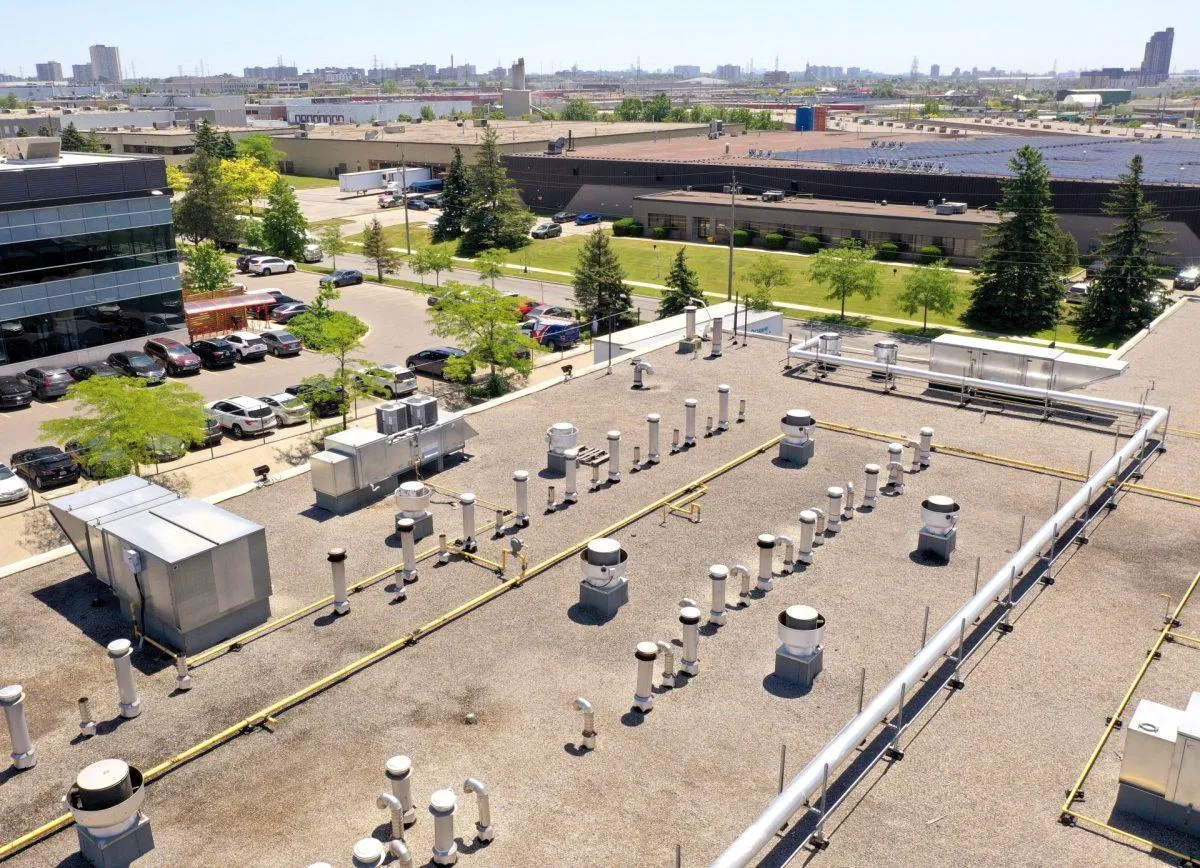
Processing plants carry some of the heaviest rooftop mechanical loads of any building type: large makeup-air units feeding washdown and cooking exhaust, banks of refrigeration condensers, evaporative coolers, and process equipment that gets added as a line expands. A plant that started with a handful of units often ends up with a roof crowded with equipment the original deck was never sized to carry. Before we re-roof, we confirm the existing structural capacity and account for the real load in place, and we build oversized, properly supported curbs for the makeup-air and exhaust units rather than reusing undersized original details. Where new equipment is going on, we coordinate the curb and structural support so the roof is not asked to carry a point load it cannot handle.
Detailing That Holds Up to Daily Sanitation
Food-plant roofs take abuse that office and retail roofs never see. Sanitation crews, refrigeration techs, and maintenance staff are on the roof constantly, and the membrane has to survive that traffic. We add reinforced walkway pads along the routes crews use to reach equipment, detail the perimeter and curb flashings so they resist the constant temperature swing between a chilled interior and a baking West Texas roof surface, and keep penetrations grouped and protected so the roof does not become a maze of unguarded openings. Clean, tight detailing also matters for the building's pest-control program, because gaps and standing water at penetrations are exactly what auditors flag, so we eliminate the ponding and the open joints that create those problems.
Documentation Inspectors Will Ask For
Roof condition is a standard line item in USDA and FDA facility inspections; inspectors look for leaks, condensation, and deterioration that could let moisture in above production. We provide condition documentation and repair records that a QA manager can hand an inspector to show proactive maintenance, plus a closeout package with material acceptability confirmations, daily reports, and warranty registration. If a leak does occur during production, our emergency protocol includes 24-hour contact, priority dry-in mobilization, and documentation support for the plant's incident reporting.
Questions Lubbock Plant Managers Ask
Can we use any roofing membrane over the line? No. The membrane, adhesives, primers, and sealants all have to be confirmed acceptable for a food-production environment first. We verify each one against your food-safety plan before specifying.
Our deck is corroding but the roof does not leak. Why? Daily washdown humidity is condensing under the deck. The fix is a properly placed vapor retarder and a corrected assembly, often with deck repair, not just a new top surface.
How do you handle drainage over our freezer rooms? With tapered insulation that moves water off the cold bays to drains or scuppers, designed around your operating temperatures, so ponding never adds load to the refrigeration system.
When can you actually work? Around your production schedule. We use your weekly sanitation window and planned shutdowns for any work over the floor, drying in each section before the line restarts.
Next Step
Send the building address, roof age if known, leak photos or condition photos, roof access notes, tenant limits, and the decision timeline. We will shape the roof walk around tenant activity, roof access, safety planning, and the operating schedule below the work and return a practical scope tied to what can be verified.