
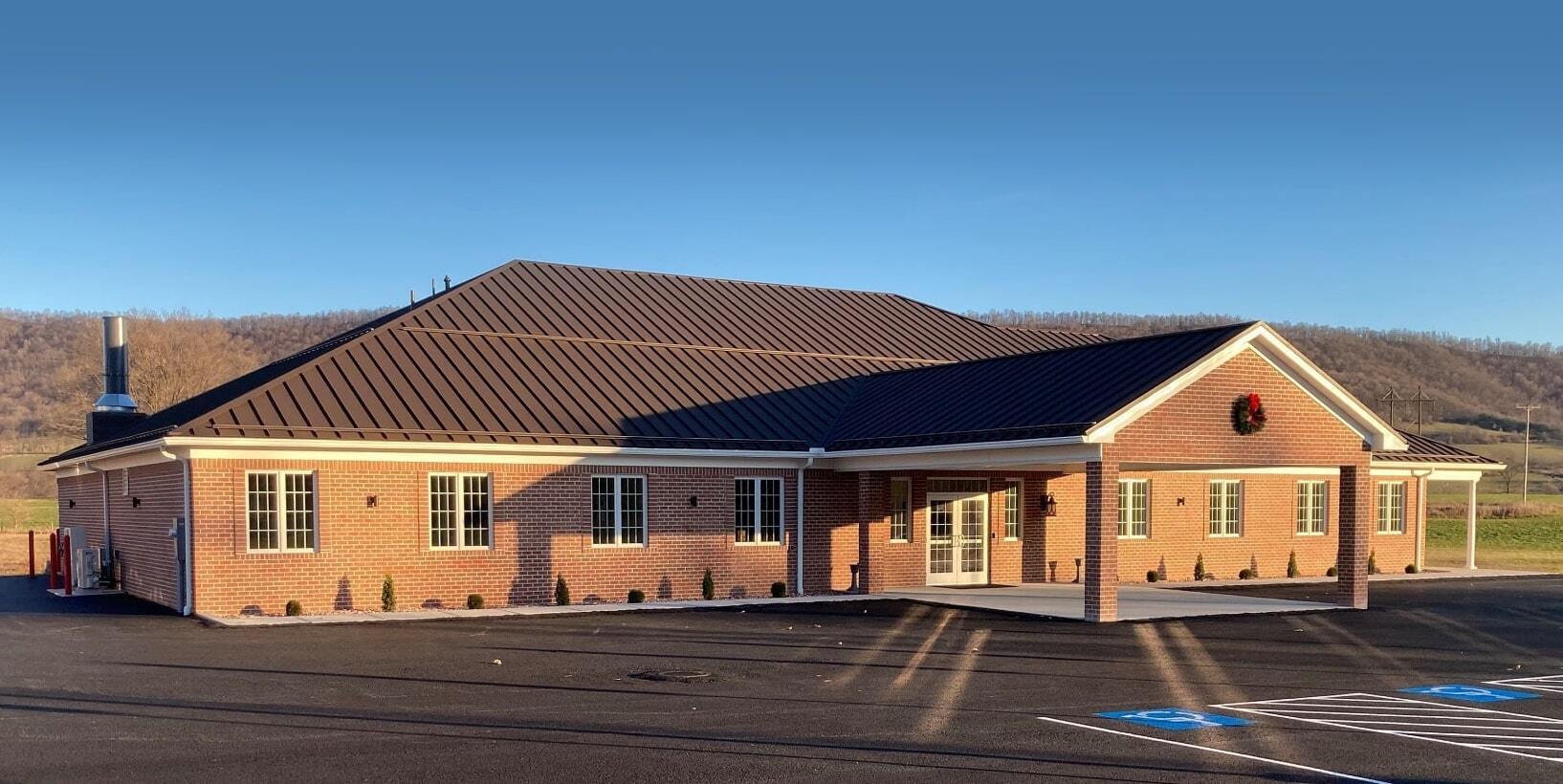
Funeral Home & Mortuary Roofing Planning
Funeral Home and Mortuary Roofing in Lubbock, TX
A funeral home is one of the few commercial buildings where the roof has to do its job invisibly. Families arrive at the worst moment of their lives, and the last thing anyone should notice is a stained ceiling tile, a tarp on the lawn, or the sound of a crew working overhead during a service. We roof Lubbock's funeral homes and mortuaries with that constraint as the starting point, not an afterthought. The work gets scheduled around the rhythm of the building, the appearance is protected the way the family-facing spaces deserve, and the parts of the facility that most contractors overlook are treated as the priority they actually are.
Lubbock's established funeral homes sit across the older neighborhoods near 19th Street, along the Avenue Q and University Avenue corridors, and out toward the newer south-side development around 98th Street and the Quaker Avenue retail belt. The city's role as the medical hub of the South Plains, centered on the Texas Tech University Health Sciences Center and the hospital district near University Avenue, means several of these facilities operate at higher volume than their footprint suggests. A building that handles services seven days a week, with visitation that runs late into the evening, has no convenient empty week for a tear-off. The roof still wears out, and it still has to be replaced without the family ever feeling the disruption.
The Preparation Room Is the Part That Cannot Be Interrupted
Every funeral home has an embalming and preparation area, and that room is tuned to ventilation that is not optional. It runs under negative pressure to keep formaldehyde and other chemical vapors contained, and the rooftop exhaust stack that makes that possible has to stay live. You cannot cap it, you cannot reroute the crew over it for a day, and you cannot treat it like a standard plumbing vent. Before we touch the roof, we locate that stack, scope the flashing around it as its own line item, and confirm with the funeral director that exhaust stays running the entire time we are working anywhere near it. The same goes for the refrigeration unit that serves the holding area. These systems run on the building's schedule, and the roofing plan bends around them.
Chapel Spans, Porte-Cocheres, and the Appearance That Carries the Building
Funeral home architecture tends to include a chapel or visitation hall that spans forty to sixty feet without an interior column, the same clear-span condition you find in a church sanctuary. That span generates real wind uplift, and on the open High Plains around Lubbock the wind is not a footnote. We confirm the deck type and pull-out values before we specify a fastening pattern, because a long-span roof that was attached for a calm climate is not attached for the spring gusts that roll across the Caprock. Older funeral homes in the central neighborhoods frequently carry built-up roofs on wood or concrete decks, and a survey that looks fine from the surface can hide saturated insulation underneath. We core-sample and run a moisture scan before anyone recommends a recover instead of a full replacement.
Then there is the part the public actually sees. The porte-cochere where families are received, the covered entry, the front parapet that frames the whole building from the street, all of it has to look composed. The canopy-to-wall transition over the drive is one of the most common chronic leak points on these buildings, and it is the kind of detail that gets patched repeatedly instead of solved. We address it as a discrete scope item with flashing detailed for the differential movement that connection actually sees, so the entry stays dry and the appearance stays intact.
How We Schedule Around Services
We work from the funeral director's calendar, not our own. Service times and visitation windows are confirmed in advance, the active chapel and entry areas stay clear and quiet during those hours, and the loud phases of the work are sequenced into the gaps. Every day ends watertight, confirmed before the building closes, so an overnight thunderstorm never becomes the family's problem. Lubbock's weather can turn fast in the spring, and a dignified facility cannot afford an open roof and a surprise cell coming off the plains.
Materials That Fit the Building and the Climate
Funeral Home and Mortuary Roofing Questions
How do you keep the work from disrupting services and visitations?
We build the schedule directly from the funeral director's weekly calendar. We get advance notice of every service and visitation, keep the chapel and entry areas quiet and clear during those hours, and concentrate the noisy phases into the open windows. Each day is dried in and confirmed watertight before the building closes for the evening.
What happens to the preparation room exhaust during the project?
It stays running. The exhaust stack serving the preparation room is located before we mobilize, the flashing around it is scoped as its own item with the director's sign-off, and exhaust operation is confirmed continuous any time we work within reach of it. We never cap, block, or take that stack offline for our convenience.
What roof system do you recommend for a Lubbock funeral home?
For most flat-roof facilities, a 60-mil reflective single-ply membrane over tapered insulation, specified to a hail-rated assembly because of the South Plains exposure. The taper fixes the drainage problems common on older buildings, and the reflective surface eases the cooling load through the long, hot summers.
Can you handle the chapel or sanctuary span?
Yes. Clear-span chapel roofs are evaluated the way we evaluate church sanctuaries, with deck type and fastener pull-out confirmed before the attachment pattern is designed for the area's wind loads. We do not assume the original attachment is adequate for High Plains conditions.
Do you also handle the porte-cochere and covered entry?
Yes. The porte-cochere, covered entry, and the canopy-to-building transition are inspected on every funeral home roof we look at. That transition is the most frequent chronic leak point on these properties, and we re-flash it as a standalone item rather than hoping a new field membrane covers for it.
Next Step
Send the building address, roof age if known, leak photos or condition photos, roof access notes, tenant limits, and the decision timeline. We will shape the roof walk around tenant activity, roof access, safety planning, and the operating schedule below the work and return a practical scope tied to what can be verified.