
Office Building Roofing Planning
Covenant Health System's administrative campus in Lubbock anchors the city's healthcare real estate sector and represents the complexity of office building roofing in a market where the tenant's operations—hospital administration, billing, IT, and patient data management—cannot tolerate interruptions, water intrusion events, or HVAC failures for any reason. Lubbock's Class A and B office market, which includes medical office buildings, professional service towers, and the Texas Tech University research and administrative buildings, operates in a climate characterized by intense hail, relentless West Texas wind, UV radiation amplified by High Plains elevation, and occasional ice storms that load horizontal surfaces unexpectedly. Each of these hazards requires specific roofing design responses.
Occupied building protocols in Lubbock are complicated by the healthcare and university character of much of the city's office inventory. Hospital administrative buildings have server room and data center cooling dependencies that are as critical as clinical facility HVAC. Texas Tech's administrative and research buildings house sensitive laboratory equipment that cannot tolerate construction vibration or dust ingress. HVAC shutdowns during Lubbock's extended summer—April through October sees consistently high temperatures—affect tenant comfort rapidly and must be restricted to early-morning hours. A roofing contractor working on a Lubbock healthcare campus who disrupts patient data operations has created a far larger problem than a delayed project schedule.
Hail protection is the defining specification difference for Lubbock office building roofing compared to markets outside the Texas Panhandle hail corridor. A standard 60-mil TPO roof on a Class A office building in Lubbock can suffer thousands of dollars of membrane damage in a single hailstorm. Hail-resistant membrane assemblies—80-mil TPO, granule-surfaced modified bitumen cap sheets, or coated metal standing seam on areas that can accept the load—are the appropriate specifications for new and replacement roofing on Lubbock office buildings. Insurance underwriters in Texas have become very specific about hail resistance requirements, and some policies now require documentation that the installed system meets a specified FM Global or UL hail resistance rating.
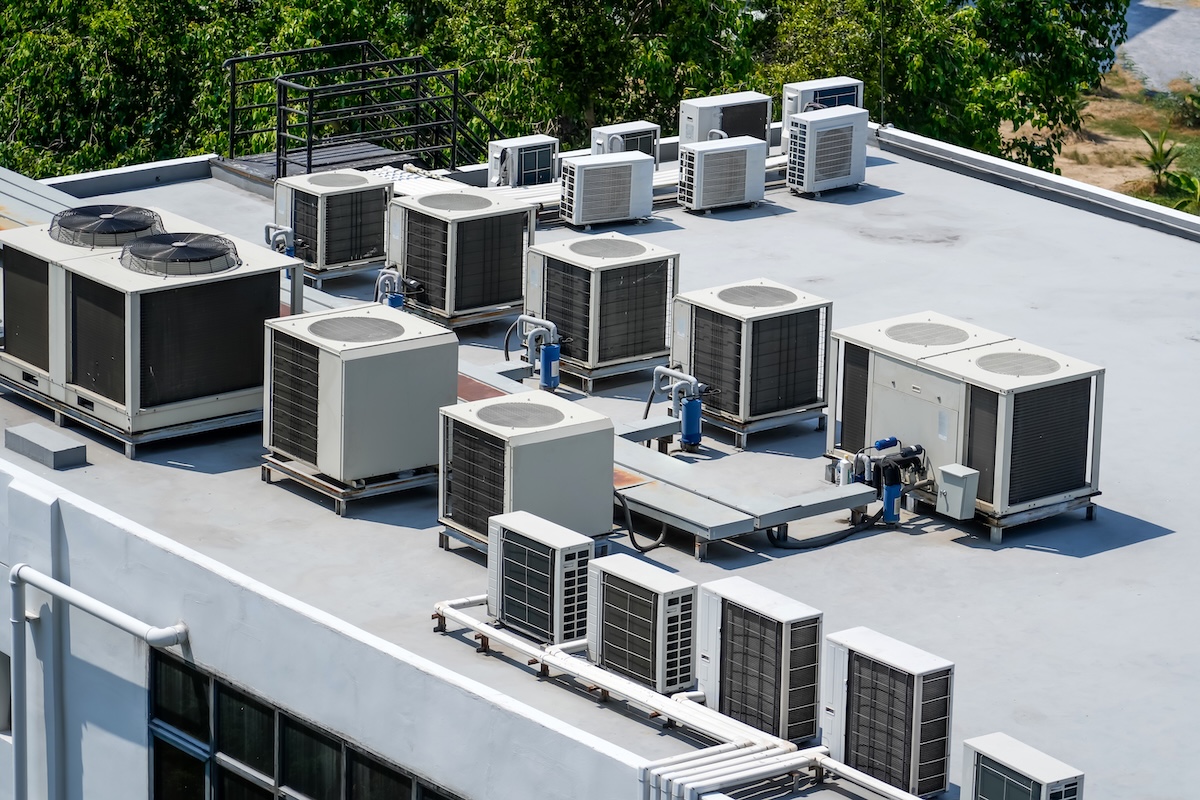
HVAC coordination on Lubbock office buildings must account for the extreme summer cooling loads that result from the High Plains solar environment. Lubbock receives more solar radiation annually than almost any other Texas market, and rooftop HVAC equipment runs at or near maximum capacity from April through September. Any curb re-flashing work that requires a unit shutdown must be scheduled for pre-dawn hours during the cooling season, and the shutdown window should be engineered to be as short as possible by pre-staging all materials and having the mechanical contractor on-site for immediate equipment restart. A 4-hour shutdown at 3 a.m. in June is manageable; a 4-hour shutdown at 2 p.m. in August is not.
Green roof options for Lubbock office buildings are less straightforward than in coastal or northern markets. Lubbock's dry climate—annual rainfall of only 18 inches—means that green roofs require irrigation to survive, which increases operational complexity and cost. Native High Plains species adapted to limited rainfall can be used in semi-intensive green roofs with minimal supplemental irrigation, but the plant palette is narrower than in wetter markets. Where green roof installation is motivated by LEED certification goals, the design should be reviewed by a landscape architect with West Texas xeriscape experience to ensure the plant selection is genuinely viable under Lubbock's dry, high-UV conditions.
Texas commercial energy code applies to office building re-roofing projects in Lubbock, and the Texas Energy Code's requirements for cool roofing are based on the state's climate zone classification. Lubbock falls in a hot/arid zone where reflective roofing contributes meaningfully to reduced cooling loads. A white TPO or PVC membrane with R-25 polyiso insulation meets current Texas Energy Code requirements for the Lubbock climate zone. Given the city's extreme UV environment, membrane UV stability is as important as reflectance—a membrane that degrades to yellow or tan within 5 years loses most of its reflective benefit and should be replaced or recoated earlier than expected.
Wind load design for Lubbock office building rooftops must account for the High Plains southwest wind that averages 15–20 mph and gusts to 50–60 mph during spring storm systems. Metal edge flashings on Lubbock office buildings must be engineered for the local wind pressure profile, with increased anchor density in corner and edge zones. Parapet cap metal that is not properly fastened can be lifted by a strong wind gust and become an airborne hazard. Roofing contractors who specify Lubbock wind loads using generic national defaults rather than locally derived calculations are not providing an adequate design for this environment.
Contractor selection for Lubbock office building roofing should prioritize firms with specific West Texas commercial experience. The Lubbock market is smaller than Texas's major metros, and the contractor community reflects that—there are fewer firms with deep Class A office project experience than in Dallas, Houston, or Austin. Contractors from the DFW or Midland-Odessa markets who work in the Lubbock area on a project basis can provide the necessary experience; verify that they have specific references from Lubbock-area office projects and that their manufacturer certification is current.
Cost benchmarks for Lubbock office building roofing run from $12–$17 per square foot for a standard hail-resistant TPO project on a typical Class B building, to $16–$22 per square foot for Class A campus work with significant HVAC coordination requirements. Green roof installations with West Texas-adapted xeriscape plantings run $20–$30 per square foot due to the specialized plant and irrigation design requirements. Texas insurance carriers increasingly offer premium credits for documented hail-resistant roofing systems, and building owners should inquire about available credits before finalizing membrane specifications.
Next Step
Send the building address, roof age if known, leak photos or condition photos, roof access notes, tenant limits, and the decision timeline. We will shape the roof walk around tenant notices, downtown staging, and low-disruption dry-in and return a practical scope tied to what can be verified.