
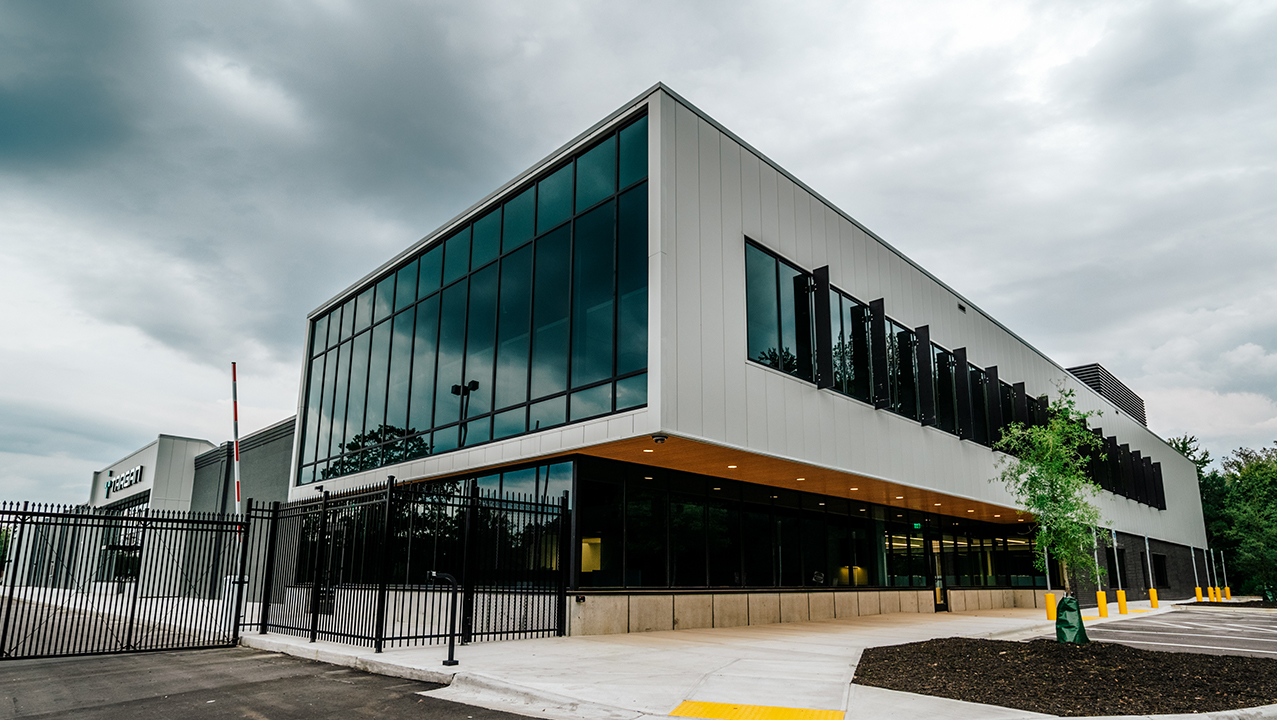
Pharmaceutical & Lab Roofing Planning
Pharmaceutical and Lab Roofing for Lubbock's Research Corridor
Lubbock carries a denser concentration of regulated lab space than its size suggests, centered on the Texas Tech University Health Sciences Center campus, the research buildings on the main TTU campus, and the biotech and compounding tenants that have clustered near the medical district off 4th Street and along the Quaker Avenue corridor. These are not ordinary commercial roofs. A leak over a cleanroom, a compounding suite, or a freezer holding research material is not a maintenance ticket; it is a contamination event with regulatory consequences. We roof these buildings to keep that event from ever happening.
The defining trait of a pharma or lab roof is that the penalty for a small failure is enormous. A drip that would be a minor annoyance over a warehouse can quarantine a batch, void a study, or shut down a GMP line. So our entire approach is focused on prevention and documentation rather than reaction. Before a crew sets foot on the deck we have mapped every penetration, confirmed access protocols, and coordinated with the facility's MEP team so nothing we do disturbs the environment below.
Cleanroom HVAC Curbs Are the Critical Detail
What sets these roofs apart from any other is the rooftop mechanical density tied to classified interior space. Cleanrooms and lab suites run dedicated air handlers that hold tight pressure differentials between adjacent rooms, and the curbs carrying that equipment are the single most important flashing on the building. If we break the seal at a cleanroom supply or exhaust curb, or if we let pressure swing while a curb is open, the room can fall out of classification.
Corrosive Exhaust and Membrane Compatibility
Lab buildings vent things that ordinary buildings do not. Fume-hood and process exhaust stacks discharge solvent, acid, or reagent vapor that can condense on the stack and drip onto the membrane downwind, creating a localized chemical attack that a standard warranty will not cover. We sit down with the facility's MEP staff and identify the actual exhaust chemistry before we pick a membrane for the zone around those stacks. For most lab applications we specify a 60-mil reinforced PVC, which is the most chemically resistant single-ply available, and we upgrade the detail immediately around corrosive stacks rather than assuming one membrane fits the whole roof. Standard TPO does not belong near a solvent or acid exhaust discharge.
Access, Credentialing, and Controlled Areas
A roofing crew that shows up at a regulated Lubbock lab without cleared credentials simply does not get on the roof, and a wasted mobilization is the best-case outcome. Buildings handling active manufacturing or controlled substances carry FDA facility standards and, in some cases, DEA security requirements that dictate who enters, when, and with what documentation. We start the credentialing and background-check process during pre-construction, typically two to three weeks ahead, so the full crew is cleared before the start date. Escort requirements, badge access, and restricted-zone limits all go into the pre-construction coordination plan so there are no surprises at the gate.
Zero-Tolerance Leak Control During the Work
The whole point is that the inside stays dry and clean the entire time the roof is open. We phase the work in sections small enough that each one is fully dried in and watertight before we leave for the day, which matters during the violent, fast-moving thunderstorms that roll across the South Plains in spring and early summer. Over the most sensitive spaces we stage temporary protection and keep an emergency dry-in kit on site so a sudden cell does not put water over a cleanroom or a freezer bank. Tear-off above critical areas is sequenced so the membrane is never the only thing standing between weather and a research suite.
Vibration-Sensitive Equipment and Hidden Roof Loads
Research and analytical labs run instruments that do not tolerate vibration: mass spectrometers, electron microscopes, and analytical balances can be thrown off by a rooftop unit cycling overhead or by crew traffic during a reroof. We map where those sensitive rooms sit before we plan the work, keep heavy staging and material loads off the deck directly above them, and coordinate timing so the loudest phases of tear-off do not coincide with a critical run inside. We also confirm the existing structural capacity before adding insulation thickness or new rooftop equipment, because lab buildings accumulate added air handlers and process equipment over their lives and the original deck was not always sized for what is sitting on it now.
Wind, Hail, and the West Texas Sky
The South Plains sits in one of the more active hail and wind zones in the country, and a research building cannot absorb a storm-driven breach the way a warehouse can. We specify wind-uplift ratings and perimeter and corner enhancement appropriate to the open, exposed sites these campuses often occupy, and we use impact-resistant membrane and cover-board assemblies where hail history justifies it. A single hailstorm that punctures a membrane over a cleanroom can cost more in lost product and remediation than the entire roof, so the assembly is built to take the hit, not just to pass an average year.
The Closeout Package Regulated Facilities Expect
Pharma and lab owners audit their vendors, and the roof file becomes part of that audit trail. Our closeout typically includes contractor qualification records, the site safety plan, material submittals reviewed by the facility engineer, daily work reports, manufacturer installation documentation, FM Global or UL system certification where the building requires it, and registered NDL warranty paperwork. We submit it through the facility's own quality-management system in the format their document control expects, rather than handing over a generic binder. We also leave the owner a marked-up roof plan showing every penetration and warranty zone, so the facilities team knows exactly what is over each critical room when they plan future work.
Questions Lab and Pharma Facility Managers Ask
How do you protect a cleanroom while you work over it? We schedule curb work in planned HVAC windows, hold pressure differentials, verify recovery afterward, and keep dust out of the air path. The cleanroom stays classified the whole time.
What membrane do you use near our fume-hood exhaust? A reinforced 60-mil PVC chosen after we confirm the exhaust chemistry with your MEP team, with an upgraded detail in the drip zone around corrosive stacks. Not standard TPO.
Can your crew get on our controlled-substance building? Yes, once credentialed. We begin background checks and access clearance two to three weeks before mobilization so the crew is approved before day one.
What documentation do we get at the end? A full package built for your quality system: qualifications, submittals, daily reports, system certifications, and registered warranty, delivered in your document-control format.
Next Step
Send the building address, roof age if known, leak photos or condition photos, roof access notes, tenant limits, and the decision timeline. We will shape the roof walk around tenant activity, roof access, safety planning, and the operating schedule below the work and return a practical scope tied to what can be verified.